

What is AI SEO and How Is It Changing Digital Marketing?
Every founder I meet asks the same question: “Is AI going to kill SEO?”
Wrong question.
The real question is: “How do I use AI to actually win at SEO while everyone else is panicking?”
I’ve been running SEO for SaaS companies since before ChatGPT was a thing.
Here’s what I’ve learned from working with brands like Dukaan and HappyFox as AI transforms how we optimize for search.
AI SEO Isn’t What You Think It Is
AI SEO isn’t about robots writing blog posts at scale. (That’s just spam with extra steps.)
It’s about using artificial intelligence to make better decisions, automate tedious tasks, and optimize for how people actually search now. Think of it as having a really smart assistant who never gets tired of analyzing data.
The numbers tell the story.
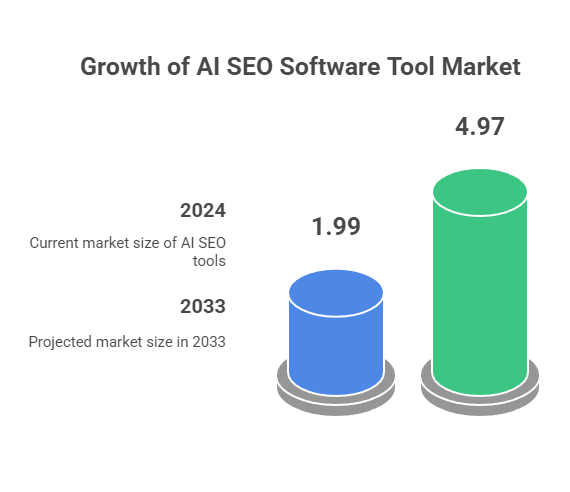
The global AI SEO software tool market is estimated to reach $4.97 billion by 2033 from $1.99 billion in 2024.
That’s not hype money – that’s real businesses solving real problems.
Traditional SEO vs AI SEO: The Real Differences
Here’s where most people get confused. They think AI SEO replaces traditional SEO.
It doesn’t. It enhances it.
| Traditional SEO | AI SEO |
|---|---|
| Manual keyword research | AI analyzes search patterns and predicts trends |
| Human-written content optimization | AI assists with content structure and optimization |
| Manual competitor analysis | AI continuously monitors and analyzes competitors |
| Reactive to algorithm changes | Proactive adaptation to search behavior |
| Focus on “best pages” | Focus on “best answers” |
The biggest shift? Traditional SEO focused on creating the “best page.” AI search wants the “best answer.” That changes everything.
The Data That Actually Matters
I see a lot of founders worried about AI making SEO obsolete. The research says otherwise.
New research analyzing 25,000 user searches found that websites ranked #1 on Google appear in AI search answers 25% of the time.
Translation: good SEO still matters. A lot.
Here’s what’s actually happening:
- 75% of marketers leverage AI to reduce the time spent on manual tasks like keyword research and meta-tag optimization
- 52% of SEO professionals noticed performance improvement from using AI for on-page SEO
- 63% of respondents reported that Google AI Overviews have positively impacted organic traffic, visibility, or rankings
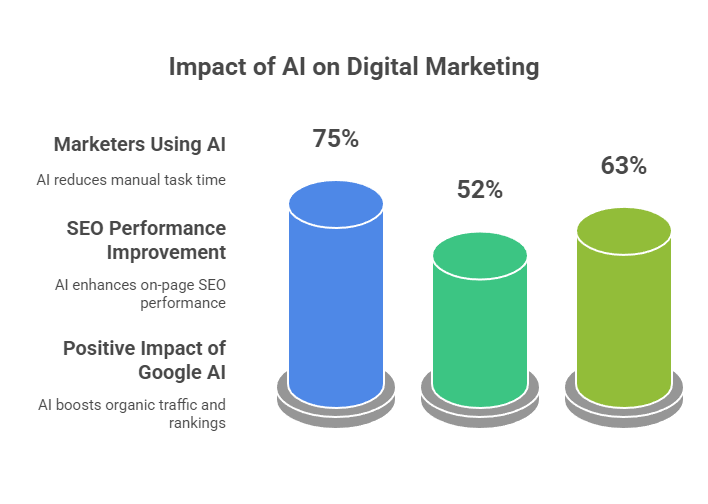
The pattern is clear: AI isn’t replacing SEO professionals. It’s making the good ones better.
How Search Behavior Is Actually Changing
AI Overviews are on the rise: 13.14% of all queries triggered AI Overviews in March 2025, up from 6.49% in January. That’s not a trend – that’s a tidal wave.
But here’s the thing most people miss: AI chatbots only represent 2.96% of search engine traffic, currently. Google still dominates, but the interface is changing.
Users want faster answers. 82% of respondents agree that “AI-powered search is more helpful than traditional search engines”.
They’re not abandoning Google – they’re expecting it to be smarter.
Tip: Stop optimizing for Google’s algorithm. Start optimizing for how your customers actually ask questions.
What This Means for Your SaaS Company
I’ve audited hundreds of SaaS sites over the past year. The companies winning with AI SEO aren’t the ones using it to spam content.
They’re the ones using it to:
1. Understand search intent better
AI tools analyze thousands of related searches to show you what people actually mean when they type “project management software.”
2. Create content that answers specific questions
Instead of writing “The Complete Guide to Project Management,” write “How to Set Up Project Milestones in 10 Minutes.”
3. Optimize at scale without losing quality
AI can analyze your entire site and suggest improvements. But you still need humans to make the final calls.
The Reality Check
Most “AI SEO” tools are just keyword research wrapped in ChatGPT. Don’t fall for it.
The companies seeing real results focus on these fundamentals:
- Authority building: AI search optimization is like a digital credit score – it takes time to build trust
- Content quality: AI can help you structure content, but it can’t give you unique insights
- Technical excellence: AI tools can spot technical issues faster than any human
Tip: If an AI tool promises to “automate your entire SEO strategy,” run.
SEO is about serving humans, not gaming algorithms.
How to Actually Use AI for SEO (Without Looking Like Every Other SaaS Company)
Here’s what I tell my clients:
Start with research, not content creation
Use AI to analyze competitor content, identify content gaps, and understand search patterns. Let it do the heavy lifting on data analysis.
Optimize existing content first
Before creating new content, use AI to improve what you already have. It’s faster and often more effective.
Focus on user intent, not keywords
AI excels at understanding the “why” behind searches. Use that insight to create content that actually helps people.
Measure what matters
Traditional metrics like bounce rate matter less in AI search. GEO proposes a set of impression metrics that measure the visibility of citations and their relevance to the user query.
The Bottom Line
AI SEO isn’t about replacing human expertise. It’s about amplifying it.
82% of enterprise SEO specialists plan to invest more in AI. The question isn’t whether you should use AI for SEO – it’s how quickly you can learn to use it effectively.
The companies that win will be the ones that use AI to become more human, not less. Better research. Better insights. Better content.
Everyone else will be stuck writing generic blog posts while their competitors build real authority.
Want to see how AI SEO could work for your SaaS company?
I’ve helped brands like Dukaan and HappyFox navigate these changes. If you’re ready for honest feedback on your current strategy (and a real plan that doesn’t involve content spam), let’s talk.
